
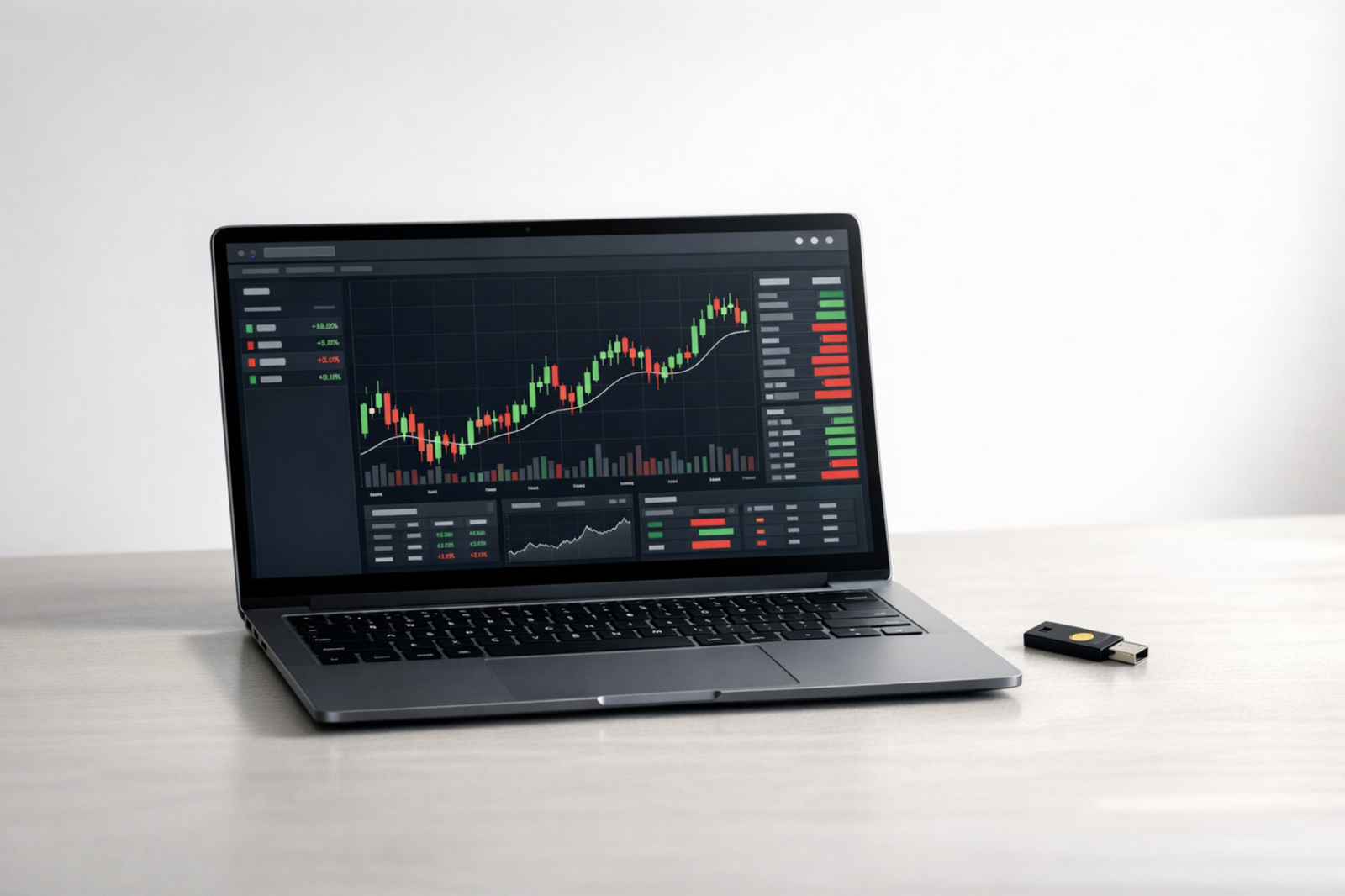

Today’s investors are choosing web-based trading platforms rather than traditional installed trading software for their ease of use and ability to provide real-time market information and trading. The evolution of customer needs and the rapid advancement of technologies are driving the rapid displacement of old software are significant for any global market participant.
Web-based trading terminals will be the primary method of trading due to the ability to trade from any device that is web-enabled. Web-based trading terminals are more advanced than traditional installed software and have a more advanced suite of trading and analysis tools through the use of cloud-based technologies.
As a result of the COVID-19 pandemic and the resulting acceleration of digital transformation for consumers around the world, cloud technologies for trading and investing have become a primary trading tool for consumers.
Browser trading’s rise from niche to norm
In the early days of browsers and web-based trading, trading via a web browser was a less desirable method of trading because of the primitive and still evolving user interfaces, the many limitations of the trading technologies, and the low-speed connections to the Internet that were available (i.e., dial-up modems, etc.). As a result, early web-based trading platforms had minimal charting capabilities, and the frequency of price changes was provided to the trader on a less-than-desirable basis. This provided a less-than-optimal environment for active trading.
The ability for web-based trading to be a reality has come from the rapid improvement of Internet connectivity and the significant advances that have been made in cloud-based technologies to provide the web-based trading terminals.
These improvements in cloud technologies for web-based trading have provided the user with a more user-friendly web trading terminal experience. These improvements have provided web-based trading terminal users the ability to operate in a more user-friendly environment for entering and monitoring trades, and providing the ability for instant and constant monitoring of trades.
High-resolution displays and faster processors at the individual level boosted the ability of web terminals to process and display in the web interface complex charts, indicators, and depth-of-market data. Therefore, the terminals were increasingly used for web-based trading as browser uniformity across individual computing devices became standard.
Today, browser-based platforms replicate much of the functionality of client-based platforms, including sophisticated analytical and order execution tools. With the exception of device-locked capabilities, these platforms exhibit an ‘anything, anywhere, anytime’ capability regarding the functionality available to the user. This is indicative of a growing trend in Fintech- the ability to access and interact with the platforms without being limited by the device in the user’s possession.
Essential features for the modern investor
A depth-of-market view with real-time prices, alongside a multitude of up-to-date (live) electronic trading (e-trading) order books, is the standard expectation of an active trader regarding web-based trading terminals. Further, for traders, there should be real-time (live) access to multiple analytical charts with a multitude of technical indicators as well as drawing tools that enable trend analysis within the browser.
The ability to manage market, limit, and stop orders in Open, Close, and Reverse formations is commonplace, as is the ability to set up one-click trading, which allows for rapid order entry and thus, instantaneous trade execution in order to achieve a trading objective. Customizable asset watchlists that are actively (live) updated with market changes should be the expected standard.
As asset classes continue to proliferate and markets now trade 24 hours in a day, efficiently managing multiple instruments is of increased importance for traders. Most trading platforms facilitate this with features such that analytical context is preserved when switching between trade instruments (forex pairs, indices, and commodities).
The mt5 web terminal shows how exciting new advancements in browser-based software get traders engaged. The new web products help traders from any country around the world. They help traders from all countries when it comes to flexibility and efficiency in their workflows and technology.
Cross-device experience and workflow consistency
Modern web-based trading terminals offer a high degree of flexibility and customization for their users. These traders change their workflows and the device they are using. They can switch from a desktop to a tablet to a mobile phone. They can choose any device they want to complete this.
Certain customizations, such as the arrangement of charts and templates for indicators, can be transferred to the next session. Save lists, price alerts, and open trades all remain the same. No matter if they are closing trades from a desktop computer or monitoring the market from a mobile device, their trades will be there.
For mobile traders, they need to remain in a consistent workflow to minimize the loss of context. Reconfiguration can be done in real time, as trades can be left pending. They can trade at the same time as a new stream of news.
These web terminals are used by new and experienced traders who want to remain in control. They have the same expectation to be connected.
To protect user data, modern web-based trading platforms use encryption and session timeouts. These protections are especially critical when trading on shared computers.
If a user forgets to close a browser window, insecure log-out features can allow entry to user accounts by malicious third parties; session management tools are used to limit the scope of this risk. In an effort to defend against the consequences of cyber threats, several services offer multi-factor identification protocols, as well as guidance on how to better secure an account.
Security, reliability, and practical limitations
If a user determines that a network’s data is vulnerable, the user must ensure that all connections are secured via encryption. Not all data vulnerabilities can be mitigated by solely focusing on secure devices.
Performance considerations can include the speed of execution of a trader’s order or the stability of the system during market swings, all of which can affect short-term trading strategies. While the majority of browser-based trading platforms are sufficiently reliable, hyper traders and algorithm traders may rely on systems that provide lower latency during peak trading periods.
